
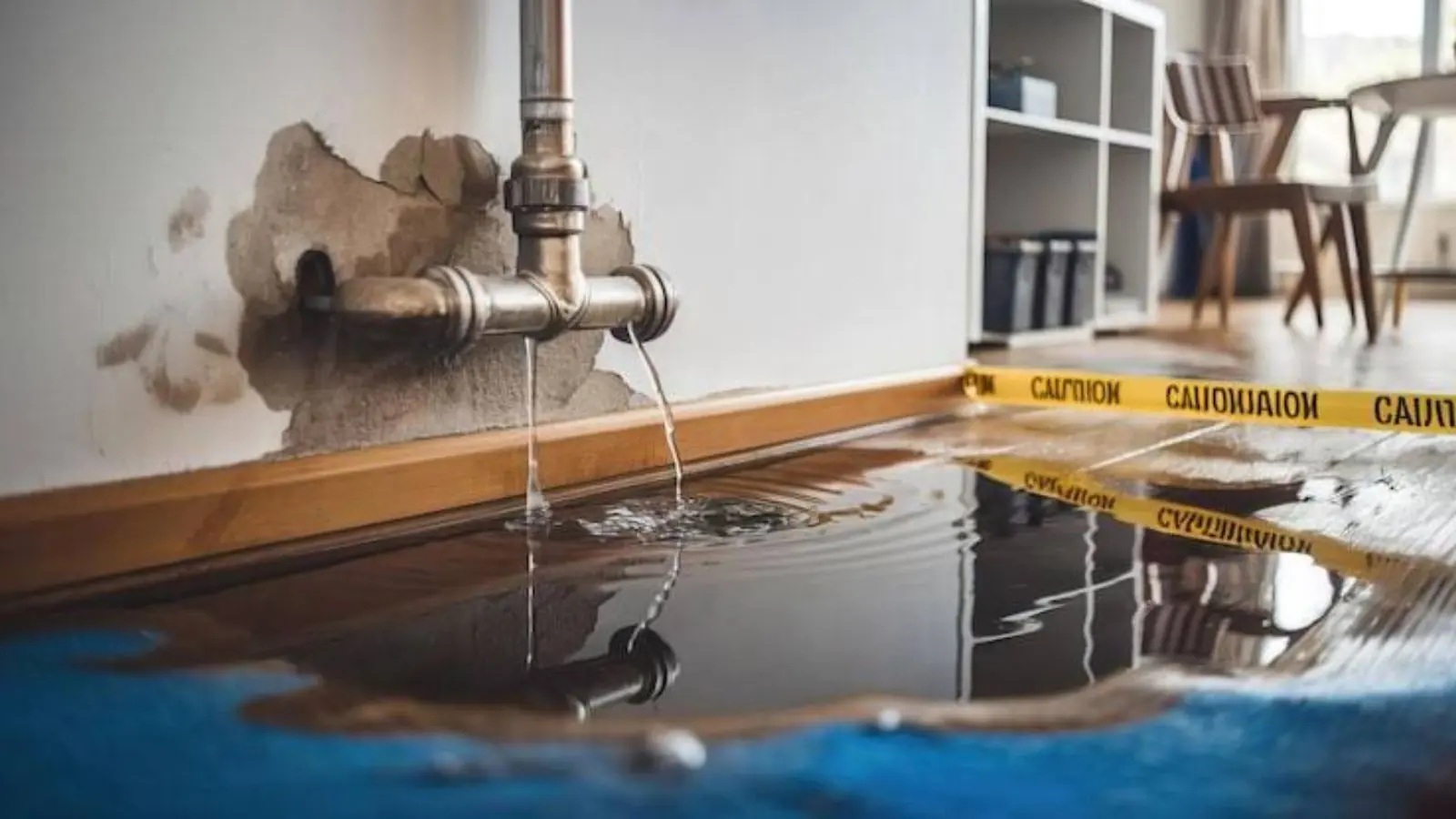
A burst pipe in Evergreen, CO usually means a line froze, swelled, and split, and the water only shows up after the thaw. The break can sit behind a wall or under a floor for hours before anyone sees a stain. What you do in the first stretch decides whether this is a cleanup or a rebuild.
Stay calm and work the list below from top to bottom. The order is built to protect people first, then the house, then the paperwork.
The first steps, in order
Find the shutoff and close it
Turn the main shutoff clockwise until it stops. Know where it is before you need it, usually near the water meter or where the line enters the house.
Make the electrical area safe
If water is near outlets, panels, or appliances, switch off power to that area at the breaker only if you can reach it dry. Otherwise stay out and call an electrician.
Open taps to relieve pressure
Once the main is closed, open the lowest faucet and the highest one to let trapped water drain out of the lines.
Photograph and record
Take wide and close photos of the split, the wet areas, and damaged belongings before moving things. Add video of each room.
Move what you can
Lift small valuables, rugs, and electronics onto dry furniture or counters. Do not carry heavy wet items alone.
Call your insurer
Contact your insurer as soon as possible and ask for instructions before any repairs.
Call a 24/7 restoration line
Crews run extraction and drying around the clock, with same-day response when available.
Safety before you reach for a mop
- Water that touched electrical outlets or wiring can energize the floor. Do not wade through it.
- Ceilings that hold water can drop without warning. Keep out from underneath bulging areas.
- A broken water heater line can also release hot water. Let it cool before handling.
- Never use a household vacuum on standing water.
- If you are unsure the area is safe, leave and call for help.
Why mountain freezes split pipes
Evergreen sits at an elevation of about 7,160 feet and gets roughly 80 inches of snow a year, with a record low near minus 38 F. Cold at that level can reach exterior walls, crawl spaces, and unheated garages even when the thermostat inside reads fine. Water expands as it freezes, and the pressure builds between the ice plug and the closed faucet, which is where the pipe often splits.
The practical result is that the pipe may crack during the freeze and only leak once the ice melts. Pipes along north-facing walls, in crawl spaces, and near hose bib penetrations are the usual suspects. If a faucet gives only a trickle on a hard-freeze morning, treat it as a warning.
You can lower the risk before the first deep freeze. Disconnect and drain hoses, let cabinet doors under sinks stay open on cold nights, and keep the heat set at a steady level. Add insulation sleeves to exposed lines and ask a plumber about problem runs.
Vacant and seasonal homes are the biggest risk
A house with no one inside can leak for days. Seasonal cabins and second homes in the hills around Evergreen often sit empty for weeks, and a heat failure or a power outage in January lets the pipes freeze with no one to notice. A split in that setting can run until the water meter is read or a neighbor spots a stain.
If you leave a home for the winter, ask a plumber whether to shut off the water at the main and drain the lines. Another option is a smart leak sensor or temperature alarm that texts you. Ask a trusted neighbor to check the thermostat after any big storm.
From wet to moldy if the drying stalls
Water that stays in a wall cavity or under a floor becomes a mold risk. EPA homeowner guidance says wet materials should be dried within about 1 to 2 days, because mold needs moisture to grow. Fix the source first, then dry.
Drywall may look dry on the surface while its paper backing and the insulation behind it stay damp. Crews check with moisture meters and thermal imaging cameras, and wet insulation and soft board are removed. If you see dark spots or smell something musty after a leak, do not wait. Mention it to the crew, and see our mold remediation page if growth is already visible. Mold health questions belong to your physician.
Cleanup after the shutoff: what a crew does
Once the water is off and the area is safe, crews begin with extraction. Pumps and extraction units pull standing water from floors, then air movers and LGR dehumidifiers dry the rooms. Our emergency water removal work is aimed at that first stage, and the follow-on water mitigation step keeps the structure on track until the meter says dry.
Crews will usually open the wall or ceiling where the pipe split. Cutting out the bad section lets them see the damage and reach wet framing. If the leak ran long, you may also see flooring lifted or baseboards removed to dry the edges.
Evergreen's water system, wells, and freeze season
Evergreen Metropolitan District provides drinking water and wastewater service for the town, with one water treatment plant, eight pump stations, and about 300 miles of water distribution pipe. A leak inside your home is on your side of the meter, so you close your own shutoff first. If you also see water running in the street or a pressure drop across the block, call the district, because that is a different problem.
Many homes in parts of Jefferson County use private wells instead. Jefferson County Public Health notes that well owners are responsible for their own water, recommends yearly testing and a yearly inspection by a qualified well contractor, and has an Environmental Health Services office to ask. After a deep freeze, have your well contractor look at the pump and pressure tank, since both can be damaged when lines freeze.
Well homes in higher areas such as Conifer deal with colder nights and long runs of pipe, and homes in Indian Hills may be on district water or a private well, so confirm which you have before you decide who to call.
What cannot wait
Some steps need speed. Get the water off, stop the spread, and start removing bulk water. Some steps can wait until you have talked to your insurer: demolition beyond what is needed to stop damage, permanent repairs, and disposal of damaged goods.
The Colorado Division of Insurance advises homeowners to keep receipts if the home is uninhabitable, since additional living expenses may apply, and to send an inventory of damaged property in one package. Burst pipe damage is generally covered under homeowners and renters policies according to the advisory, but ask your insurer about limits and exclusions.
Pipe split and water still spreading?
Call around the clock and tell the dispatcher what you can see.
Frequently asked questions
What should I do first when a pipe bursts?
Close the main water shutoff, then make the area electrically safe before wading in. Next come photos, moving valuables, and a call to your insurer and a restoration line.
Is a burst pipe covered by home insurance?
The Colorado Division of Insurance says burst pipe damage is generally covered under homeowners and renters policies, but limits and exclusions vary. Ask your insurer, and get their instructions before making repairs.
Can I wait a few days to start drying?
Waiting is risky. EPA homeowner guidance puts the drying window for wet materials at roughly 1 to 2 days, since mold needs moisture. Standing water and wet insulation should be addressed immediately.
My Evergreen cabin has a private well and the pipes froze. What should I check?
Close the shutoff and fix any split lines, then have a qualified well contractor inspect the pump and pressure tank before you restore pressure. Jefferson County Public Health recommends yearly testing and inspection for well owners, so ask about a water test too.