
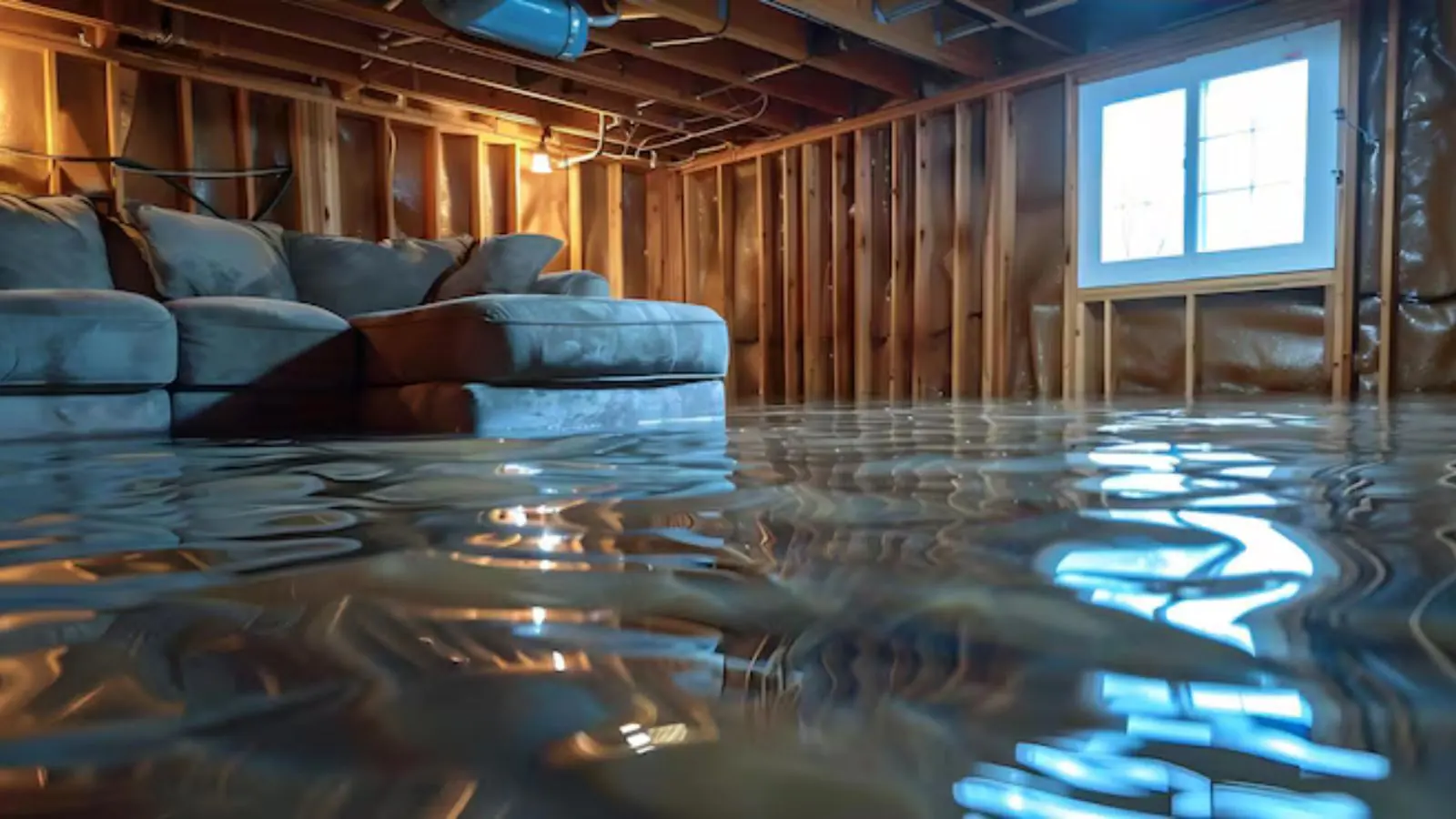
Flood damage restoration in Evergreen, CO is the response to water that came from outside the plumbing: a creek over its banks, storm runoff, rising groundwater or a sewer line that backed up. Flood water is treated as contaminated because it carries silt, debris and bacteria, so the work is different from a pipe leak.
The dispatch line answers 24/7, and the first call usually ends with a list of what to photograph, what to leave alone and which areas to stay out of.
When flooding is an emergency
Flooding is an emergency from the first inch. Water in a basement can reach a furnace and an electrical panel quickly, and water carrying sewage is unsafe to touch. Roads can close and utilities can be affected during a storm, so the dispatcher asks about access and conditions before sending anyone.
Flood water safety
- Do not wade through flood water. It can hide debris and may carry sewage or fuel.
- Do not use electrical equipment or touch outlets in a flooded room. If you smell gas, leave and call 911 or the utility.
- Do not drive through standing water on a road, even in a heavy vehicle.
- Wait for guidance before using fans or vacuums on wet, contaminated materials.
What flood water is made of
Restoration sorts water into three categories under the ANSI/IICRC S500 standard. Flood water is generally Category 3, and anything that sat for a long period can slide into that category.
| Water source | Category | What it means for the job |
|---|---|---|
| Broken supply line | 1 | Often dried in place if caught early |
| Washing machine overflow | 2 | Cleaned, sanitized and partly removed |
| Creek or storm flooding | 3 | Porous materials removed, structure cleaned and dried |
| Sewage backup | 3 | Contaminated, with strict containment and removal |
Because the category can rise with time, ask any company whether its crews work to S500 and how they document the category on your job.
Basement flooding cleanup
Basements collect water from several directions: window wells that overflow, sump pumps that fail, foundation seepage and sewer lines. The first job is extraction, then removal of materials that cannot be cleaned, such as carpet, pad and the lower stretch of finished drywall. Concrete and masonry can be cleaned and dried, but framing and stored boxes often cannot.
After extraction the crew cleans surfaces with antimicrobial products, sets air movers and LGR dehumidifiers, and checks moisture until readings are normal. Finished basements dry slowly because cold concrete releases moisture for a long time. Skipping that step is how a basement that looked fine turns into a mold remediation job a few weeks later.
Sewage backup cleanup
A sewage backup is a health and safety event, and it should be treated as one from the first minute. Keep children and pets away, do not use the affected drains and do not try to clean it up with a household mop. Call the 24/7 line, and if the backup seems to come from the street main rather than your house, call your sewer provider as well.
The cleanup crew removes porous materials the sewage touched, cleans and disinfects hard surfaces and deodorizes the space. Carpet, pad and insulation are removed, not dried. Health questions after exposure belong to a physician.
Flood risk in Evergreen and the Bear Creek corridor
Bear Creek runs through Evergreen, and the Mile High Flood District lists 24 known floods in the creek's basin since the 1860s.
The 1896 flood that struck Morrison was caused by rain centered on Cub Creek near Evergreen. Evergreen Lake is the drinking water supply for the area, and the district that runs it says the dam performed exceptionally well in the 2013 flooding, but the lake is not a flood control facility.
Creek-side homes cannot count on it to absorb a cloudburst.
The most recent reminder came in June 2026. A night storm sent Bear Creek from about 6 cubic feet per second to nearly 1,900, and homes in Kittredge showed water lines of 2 to 3 feet.
Troublesome Gulch water entered homes, and mud reached downtown Evergreen. If you live near the creek, check your address on FEMA's Flood Map Service Center, and ask your insurer about flood coverage before storm season. Downstream, the Idledale page describes the canyon where creek water arrives quickly.
How the flood restoration process runs
- Safety check and utility status.
- Extraction of standing water with pumps and extraction units.
- Removal of contaminated porous materials.
- Cleaning and antimicrobial treatment of what stays.
- Structural drying with moisture readings each visit.
- Rebuild, after readings confirm dry. See water damage repair.
What affects flood restoration cost
Cost depends on the depth and duration of flooding, the water category, how many rooms and floors are affected, the materials involved, the drying time and the rebuild scope. A basement with unfinished concrete walls costs less to clean than one with finished drywall, carpet and built-ins. You get the scope and price explained before work starts. Want your real number? Describe the situation to dispatch.
Flood damage and insurance
Flood damage from creeks and storms is usually excluded from standard homeowners policies, and separate flood coverage is needed. Sewer or drain backup is often handled by an endorsement, so check your policy for that wording. Ask your insurer which events are covered, and keep receipts for emergency costs. The Colorado Division of Insurance advises documenting damage with an inventory and contacting your insurer promptly. We cannot promise what a carrier will approve.
Flood water in the house?
Call the 24/7 line and keep out of the water.
Frequently asked questions
Do you handle flood damage emergencies at night or on weekends in Evergreen?
Yes. Dispatch is open 24/7. Because floods often come with storms, the dispatcher asks about road access and utility status and tells you what is realistic. Same-day response is offered when available.
Is flood water in my basement dangerous?
Treat it as contaminated. Creek and storm water can carry sewage, silt and debris. Stay out, avoid electrical equipment in the room and call before you start cleaning.
Can carpet be saved after a flood?
Usually not. Carpet and pad that soaked in Category 3 water are removed and replaced. Hard surfaces can often be cleaned, sanitized and dried.
How do I know if my home is in a flood zone?
Look up the address on the FEMA Flood Map Service Center and ask your county or building department. Map zones change, so check the current map instead of relying on memory.
Will my homeowners policy cover creek flooding?
Usually not. Flood damage is commonly excluded, and flood coverage is separate. Check your policy and ask your insurer.