
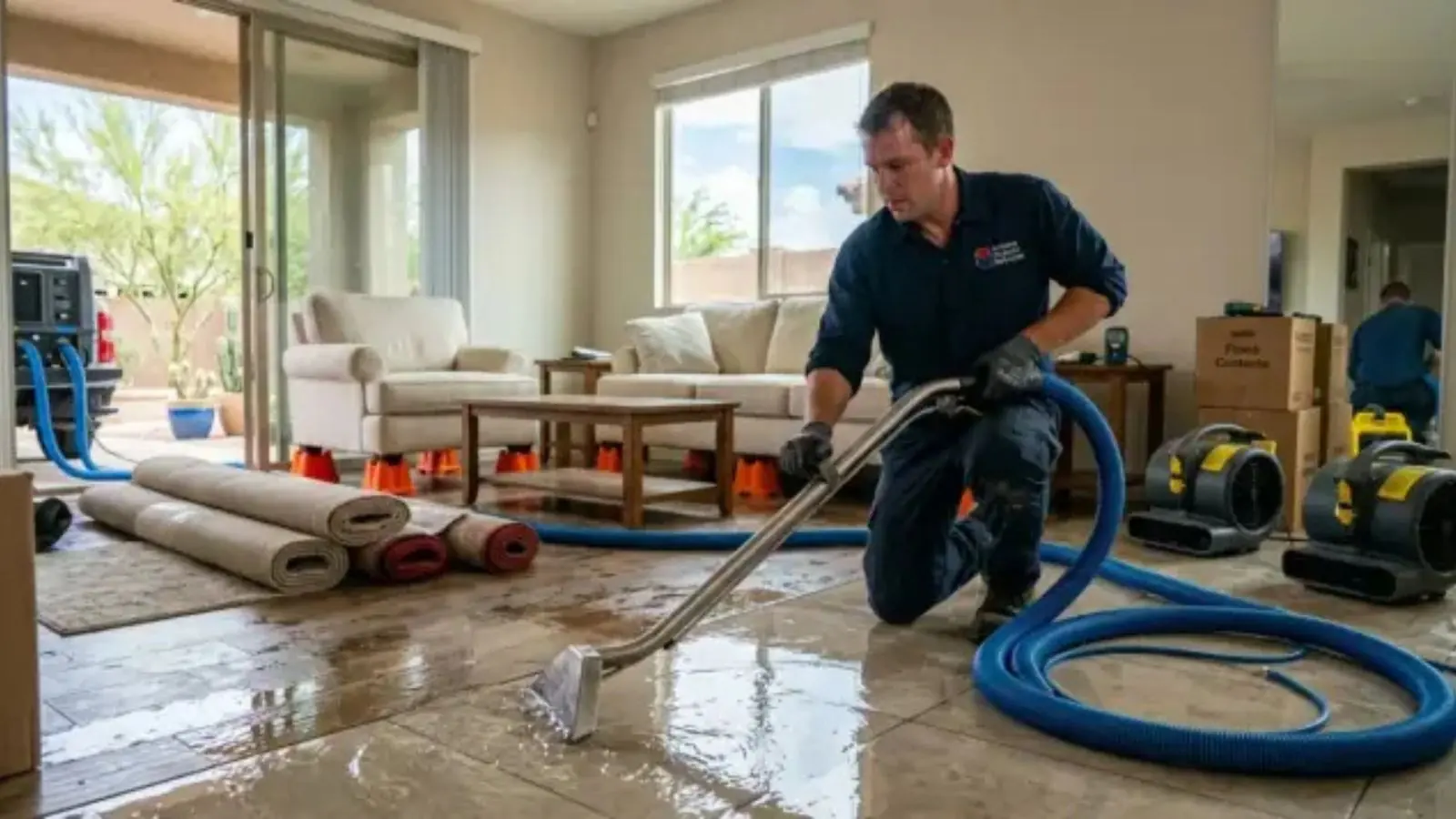
Emergency water removal in Evergreen, CO means getting standing water out of a home with pumps and extraction units before it soaks into floors, walls and furnishings. It is also called water extraction, and it is usually the first thing a crew does on a burst pipe, a failed water heater or a flooded basement. Because water keeps spreading while you wait, the dispatch line answers 24/7 and the dispatcher starts with one question: is the source stopped?
When standing water is an emergency
Any water deep enough to cover a floor is an emergency, and water that is rising is more urgent still. A quarter inch across a large room can hold hundreds of gallons, and it moves into walls, under baseboards and down into lower floors. Water in a basement can reach a furnace, a water heater or an electrical panel in a short time.
Calls at night and on weekends are routine. A pipe that split during a freeze often waits until the thaw, and a sump pump that fails during a storm can quit in the dark. Same-day response is offered when available, and the dispatcher explains what is possible for your road and conditions without promising an arrival time.
Standing water and electricity
Water and power do not mix. Do not walk through water that touches outlets, appliances or a panel. If the electrical panel is dry and you can reach it without crossing wet floor, you can switch off the breakers for the wet area. If the panel is wet, or you smell gas, leave the building and call 911 or the utility before you call the restoration line.
How extraction works
Removal starts with the water you can see and then works toward the water you cannot. The tools are chosen by depth and by what is underneath.
- Submersible pumps clear deep water in basements and crawl spaces quickly.
- Extraction units pull water out of carpet, pad and the surface of hard floors.
- Wet vacuums reach corners, stair treads and low spots where pumps cannot.
- Moisture meters and thermal imaging cameras then show where water went after the visible water is gone.
A crew that removes visible water and leaves is not finished. Water travels under flooring and into wall cavities, so extraction should flow straight into drying. That next stage is covered on the water mitigation page.
Burst pipe water damage
A burst pipe is the most common reason people call for emergency removal. In a cold climate the split often happens in a spot you never see, such as an exterior wall, a crawl space or a vacant cabin, and the water may run until someone returns. The first moves are the same everywhere: find the main shut-off valve, close it, and open a low faucet to drain the lines.
Then the crew takes over. Water that came from a clean supply line is typically Category 1, and the quick extraction and drying that follows can save a lot of material.
Carpet pad, insulation and the lower stretch of drywall are the items most often removed when they have been wet for a long stretch. The longer a pipe ran, the more of the house it reached, so the number of rooms involved often matters more than the amount on the floor.
Crawl spaces, basements and whole-house flooding
Some of the heaviest calls involve water that collects out of sight. A crawl space can hold standing water for days after rain or snowmelt, and a finished basement can take in hundreds of gallons from a failed sump or a seeping window well. Callers also describe water that seems to be coming from everywhere at once, which usually means a supply line failed above and ran down through several floors.
In those cases the crew pumps first, then looks at what the water touched on its way down. Ceilings that have taken water from above are cut open to release trapped moisture, and wall cavities get checked with a meter. If the water came from outside, such as a creek or groundwater, the job moves to flood damage restoration because the water is not clean.
What Evergreen conditions add
Evergreen sits at roughly 7,160 feet and gets about 80 inches of snow a year, so freeze and snowmelt are part of local life. Pipes in unheated spaces split, and fast snowmelt can send water toward foundations.
Homes along Bear Creek face a rarer but bigger risk: in June 2026 a storm pushed the creek from about 6 cubic feet per second to nearly 1,900, according to the Jefferson County Sheriff's Office, and water entered homes in Kittredge and mud reached downtown Evergreen.
If you live in a canyon community such as Morrison, remember that road conditions can affect access and that dispatch will tell you what to expect. Never drive through standing water to reach a house.
What affects the cost of water removal
Names and numbers vary by loss, so ask for the scope in writing. The main factors are how much water there is, how long it sat, the category of the water, the size of the affected area, how much material must be removed and how many drying days follow. A pipe caught early costs less to put right than one that ran all weekend. Want your real number? Describe the loss to dispatch.
Insurance notes for water removal
Sudden and accidental water damage is often covered, while slow leaks and long neglect often are not, and floods usually need a separate flood policy. Check your policy before you decide anything. The Colorado Division of Insurance recommends that you contact your insurer promptly, document the damage and take reasonable steps to prevent more of it. Photos of standing water before extraction are useful evidence, so take them if it is safe.
Standing water right now?
The 24/7 line is open and dispatch explains the first steps.
Frequently asked questions
Do you handle emergency water removal at night or on weekends in Evergreen?
Yes. The dispatch line is open 24/7, including holidays. Same-day response is offered when available. While you wait, stop the source if you can do so safely, lift valuables off wet floors and keep everyone out of contaminated water.
How fast does water have to come out?
As soon as possible. Water that sits soaks into drywall, subfloor and insulation, and the longer it stays, the more of those materials may need removal. Mold can start within a day or two of continuous moisture.
What is the difference between water removal and water mitigation?
Removal is the extraction of standing water. Mitigation includes removal and also covers moisture mapping, selective demolition and structural drying. Most jobs flow from one to the next.
Can you pump out a flooded crawl space?
Yes. Crews use submersible pumps and extraction tools and then check moisture in the framing and subfloor. Ask the dispatcher about access, because some crawl spaces are tight.
Is the water in my basement safe to handle?
Not always. Clean supply-line water is the least risky, but water from a creek, a sewer backup or a long-standing flood is contaminated. When in doubt, stay out of it and call. The water damage cleanup crew handles sanitizing afterward.