
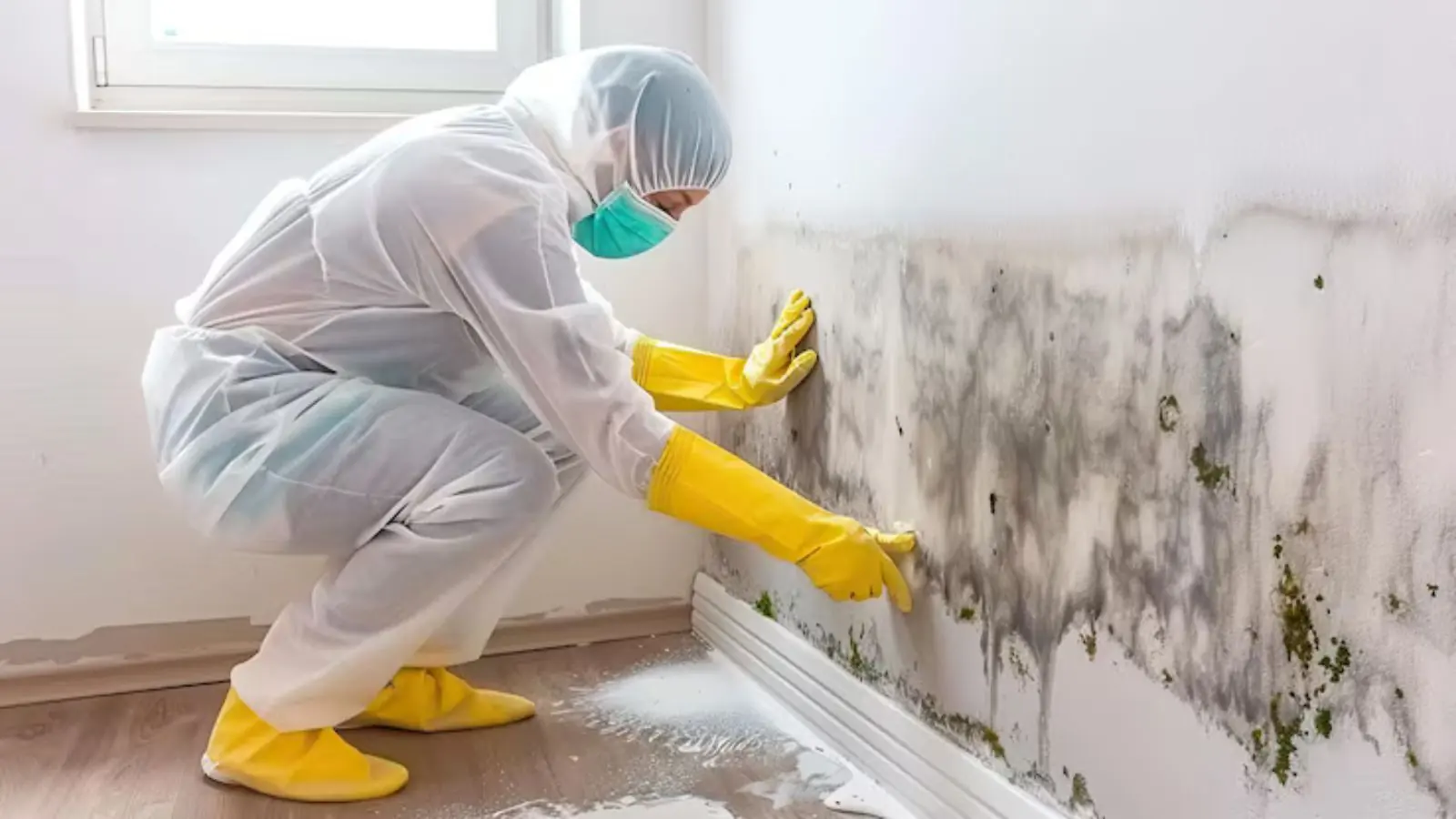
Mold remediation in Evergreen, CO is the process of finding the moisture that let mold grow, containing the affected area and removing contaminated material. It is a secondary service here after water damage, because most mold calls begin with a leak: a toilet supply line, a roof, a condensate drain or a bathroom fan that vented into an attic.
Remediation follows the ANSI/IICRC S520 standard for professional mold work, and you can ask any company whether its crews work to it.
Why mold follows water damage
Mold needs moisture, organic material and time. Drywall paper, wood framing, carpet pad and cardboard all provide food, so a wall that stays damp for more than a day or two can start growing mold on its surface and inside the cavity. EPA homeowner guidance is to dry wet materials within about one to two days and to fix the water source first.
That is why the order of work matters. If a leak was never dried properly, the crew deals with the water first and mold second. The page on water mitigation explains the drying step, and mold work often begins when drying was missed or came too late.
Musty smell, dark spots, damp closet: what to do
People rarely search for the trade name. They search for a smell near the basement stairs, dark spots in a bathroom corner or a closet wall that feels cold and damp. Those signs point to moisture, and moisture is the real problem. Mold on the surface may be the smaller part of what is happening behind it.
A first look should answer three questions: where is the moisture coming from, how large is the affected area and what materials are involved. A moisture meter and a thermal imaging camera help find hidden dampness. A smell with no visible growth often means a wet cavity that has not yet broken through.
How remediation works
Remediation is a controlled process, not a scrub-down.
- Fix the water source. Remediation without a dry structure fails.
- Contain the area. Plastic barriers and a negative air machine keep spores from drifting into the rest of the house.
- Remove contaminated materials. Porous materials such as drywall, insulation and carpet pad are cut out and bagged.
- Clean what stays. Wood framing and hard surfaces are HEPA vacuumed and cleaned.
- Dry and verify. Air scrubbers and dehumidifiers run until readings are normal.
Small growth on a limited area, roughly 10 square feet by EPA homeowner guidance, is often something a homeowner can clean while wearing protection. Larger or hidden growth, or growth in a wall cavity, calls for a professional crew.
Mold testing and inspection
Inspection starts with a visual survey and moisture readings. Some people ask for air or surface sampling, and others have no need for it. EPA guidance says routine sampling is not usually necessary, because the fix is the same whatever the species: remove the growth and fix the moisture.
Independent clearance testing is different. It is done by a separate party after remediation and is sometimes requested by a lender or buyer. If a home sale or loan depends on mold clearance, ask the lender what it wants and ask about independent testing before work starts. We cannot promise what any lender will accept. Mold testing and remediation protocols are best discussed before you sign anything, so ask dispatch for the scope in writing.
Mold removal and black mold cleanup
Black mold is a common name, and color does not tell you the species or the risk. A lab is the only way to identify it, and most homeowners do not need that. The practical steps are the same: control moisture, contain the area and remove the growth.
Household cleaners can remove surface growth on hard materials, but they do not solve a moisture problem. Porous material such as drywall and insulation cannot be cleaned reliably and is removed. Health questions about mold exposure belong to a physician. We work on the building, not on medical advice.
Mold after water damage
The timeline shows why speed matters.
| Time after water | What may be happening | What helps |
|---|---|---|
| First day | Materials are wet, growth has not started | Extraction and drying |
| Day two to three | Surface growth can begin on damp paper and wood | Confirm drying with readings |
| A week or more | Growth can spread in a wall cavity | Containment and removal |
If a flood damage restoration job left materials wet, ask the crew to check for mold before walls close. If mold is already visible, ask for containment first.
Where mold shows up in Evergreen-area homes
Common spots include basements after snowmelt or a failed sump, bathrooms with weak ventilation, closets behind a leaking wall or an AC condensate line and ceilings below roof leaks.
In a mountain climate where winters are long, cold exterior walls can sweat and encourage growth in corners and behind furniture. If the home is on a private well or septic system, ask Jefferson County Public Health about environmental questions, and for homes in higher areas such as Conifer, moisture behind insulation is a frequent culprit.
What affects remediation cost
Costs depend on the size of the affected area, the materials involved, the level of containment, how many days air scrubbers run, the number of rooms and whether clearance testing is requested. Rebuilding is separate from removal. Want your real number? Call dispatch and describe what you see.
Licensing and insurance
Ask whether your state licenses mold work, and ask any company about its qualifications. Insurance coverage depends on the cause. Mold that follows a sudden covered loss is sometimes covered, while mold from long-term moisture often is not. Check your policy and ask your insurer, and note that we cannot promise coverage.
Mold questions?
Call the line and ask what an inspection involves.
Frequently asked questions
Do I need mold testing before remediation?
Not usually. EPA guidance says routine sampling is not typically needed. Testing can matter for a sale, a loan or a dispute, so ask about independent clearance testing if that applies to you.
Can I clean mold myself?
Small surface growth on a limited area can often be handled with protection. Larger, hidden or recurring growth needs a professional assessment, and the moisture source must be fixed either way.
Will mold come back after remediation?
No honest company can promise that. Mold returns when moisture returns, so the key is fixing the water source and keeping the area dry.
Is mold remediation covered by insurance?
It depends on the cause and your policy. Sudden covered losses sometimes include it, while long-term moisture often does not. Check your policy and ask your insurer.
Do you handle mold emergencies?
The line is open 24/7 and dispatch can talk through what you see. Most mold work is planned, but active leaks should be stopped right away.