
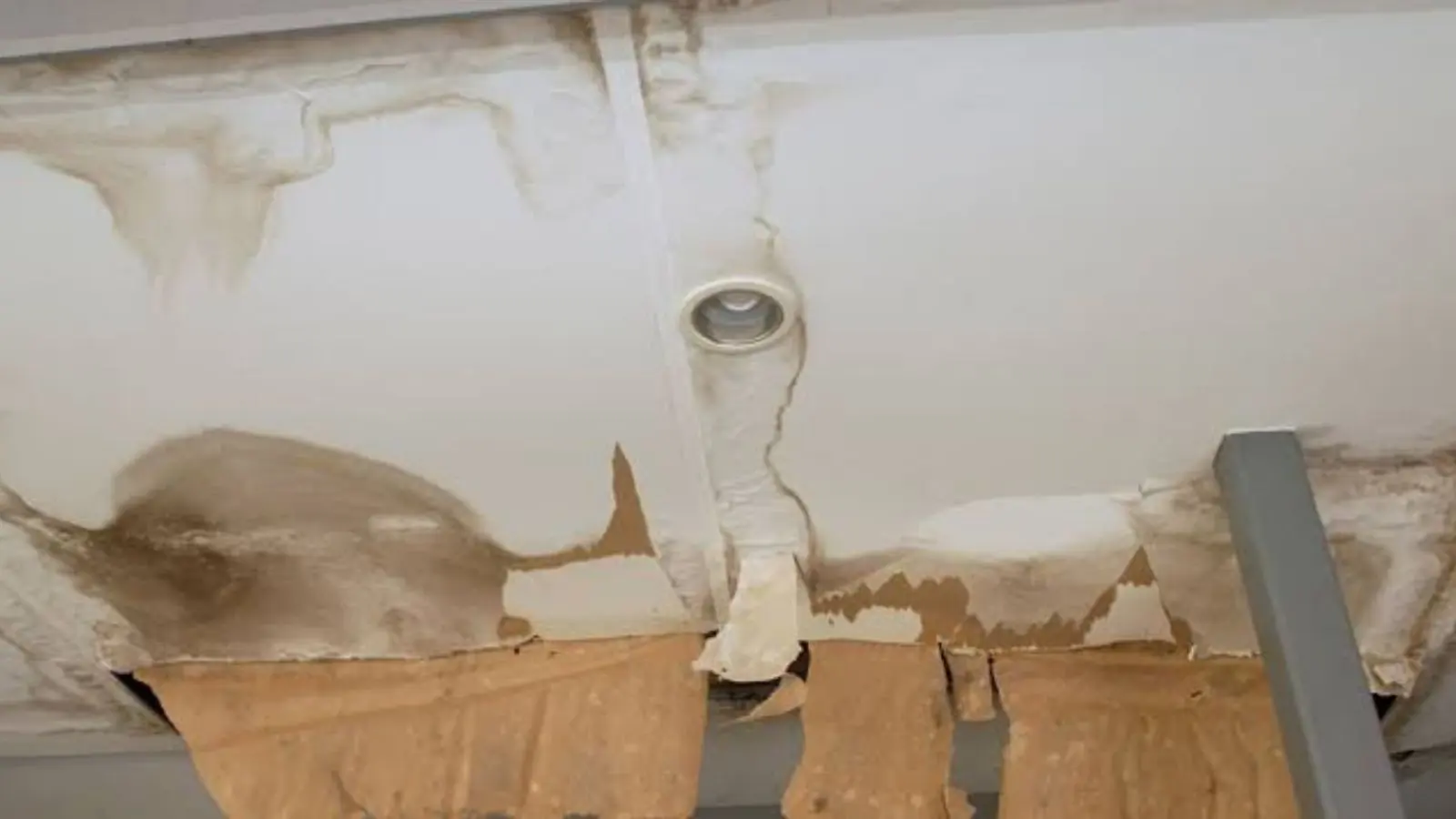
Ceiling water damage in Evergreen, CO is any moisture that has soaked through the drywall or plaster overhead, leaving stains, soft spots, bubbling paint or a visible drip. The ceiling itself is almost never the problem. It is the first surface that shows what is going wrong in the roof, the attic, a bathroom above or the mechanical runs in between.
That makes the stain a clue, not a diagnosis. The color, the edge, the location and the timing together tell you whether water is still arriving or whether an old leak is simply showing its history.
What sits above your ceiling
A single-storey home has a roof deck, insulation and attic air above the drywall. A two-storey home adds bathrooms, laundry rooms and kitchens, with supply lines and drains threaded through floor joists. Each of these can leak independently, and each leaves a different pattern.
Roof and flashing
Worn shingles, failed flashing around chimneys and vents, and clogged valleys let water in, usually showing up after rain or snowmelt.
Ice dams
Snow melts on a warm roof, runs to the cold eave and refreezes, pushing water back up under the shingles and into the ceiling near the exterior walls.
Supply lines
A pinhole or loose fitting in a pressurized pipe leaks all the time, day and night, and often darkens a small, steady area.
Drain and waste lines
A leaking tub drain, toilet flange or shower pan seeps only when fixtures are used, so the stain may grow after a shower.
HVAC condensate
An air handler or furnace in the attic produces water that drains away through a line, and if that line clogs the pan overflows onto the ceiling below.
Plumbing vents and penetrations
Gaps where pipes or wires pass through the roof or attic floor let water or humid air in around them.
Ice dams and the Evergreen winter
Snow is the cause most specific to this town. A roof that carries snow for weeks, with heat leaking from the living space below, melts the underside of the snowpack while the eaves stay frozen. The meltwater has nowhere to go and creeps under the shingles.
You will often see the stain along the outer edge of a room, not in its middle, and it may appear during a thaw instead of during a storm. Icicles hanging from the gutters and a ridge of ice along the eave are the outside tell. Keeping the attic cold and well ventilated is the long-term fix, but the leak needs dealing with first.
Reading the stain
Stains record the history of the leak. A few features help you separate a new problem from a long-running one.
| What you see | What it often means | Active or old |
|---|---|---|
| Pale yellow patch with soft, fuzzy edges | A recent or intermittent leak | Likely active |
| Brown ring inside a larger ring | Repeated wet and dry cycles | Recurring |
| Dark brown with a hard, crisp outline | Water that came and went over a long time | May be old, test it |
| Bubbling or peeling paint, ceiling feels cool | Moisture sitting behind the paint now | Active |
| Sagging or drooping drywall | Water collected in the cavity | Active and urgent |
| Musty smell with no visible stain | Hidden dampness above | Unknown, investigate |
| Drip only after showers | Drain or tub-line leak upstairs | Active when used |
A stain that looks dry is not proof the leak is over. Gypsum and paint change color as they dry out, so a damp section can look pale while the board behind it is still wet. Only a moisture meter can settle it, and a thermal imaging camera is even better at showing a cool wet patch behind a dry-looking surface.
Warning signs you should not ignore
Some signs say the ceiling is in immediate trouble. If any of these appear, treat the room as unsafe until it has been checked.
- A bulge or sag in the drywall, which can carry many pounds of water and let go suddenly.
- Water dripping from a light fixture or smoke detector, which means the electrical system is wet.
- Cracking or a sudden drop in the texture, which suggests the board is losing its bond to the framing.
- A growing stain over several hours, which means the source is still flowing.
For a ceiling that is dripping, sagging or flowing, emergency water removal is the service that stops the damage from spreading while you wait for a repair plan. After drying, the rebuild falls under water damage repair.
Water category and what it changes
Not all ceiling water is equal. Clean water from a supply line or rain is one category. Water that has passed through insulation, attic dust or a drain line picks up contaminants and can be treated differently. A drain or toilet overflow above the ceiling is a different job from a roof leak, since porous materials that touched dirty water are usually removed, not dried.
The ANSI/IICRC S500 standard classifies water by source and contamination, and professionals use it to decide what stays and what goes. Ask any company whether its crews work to S500 and how they classify your loss.
How Evergreen's climate drives ceiling leaks
Evergreen sits at about 7,160 feet, takes roughly 80 inches of snow a year and sees a record low near minus 38 F. That means long freeze periods, repeated freeze and thaw cycles and heavy snow sitting on roofs. A pipe in an exterior wall or an unheated attic can freeze and split, then leak only when it thaws.
The practical consequence is timing. A ceiling that stains during a warm afternoon after a cold night may have a frozen-then-thawed pipe above it, and a stain that appears after a storm and clears may be an ice dam. Note when the water shows up, because that detail helps a plumber or roofer find the source faster.
Homes in Morrison and in Golden are lower in elevation than Evergreen, so ask a local crew how snow and freeze conditions at your address affect the cause.
What to do in the first hour
Keep it simple and safe. Do not poke at a sagging ceiling with your body under it. Move people and valuables out of the room, put a container under the drip and switch off power to that room at the breaker if there is any chance water reached a fixture.
Take photos and a short video of the stain, the source if you can see it and the area around it. The Colorado Division of Insurance advises contacting your insurer as soon as possible and taking steps to prevent more damage, which includes this kind of quick protection. Write down the time you first noticed it.
When a stain is just history
Plenty of ceilings carry an old stain from a leak that was fixed years ago. The way to confirm is to take readings across the stain and beyond it, over a few days. A steady dry reading and no change in size suggests it is finished.
Even then, a stain is worth sealing with a stain blocker before repainting. If the reading ever climbs, or the ring grows, treat it as a live leak and have it traced.
Not sure if the leak is still active?
Call and describe the stain, and a restoration professional can tell you what to check first.
Frequently asked questions
How can I tell whether a ceiling stain is active?
Check whether the stain has grown, whether the paint feels cool or damp, and whether a moisture meter shows a higher reading than a dry spot nearby. A thermal camera can also show a wet patch the eye misses.
Why does my ceiling only leak when it snows or thaws?
That pattern usually points to an ice dam or to snowmelt finding a gap in the roof. The leak only happens when the snow above is melting, so it can look random from inside the house.
Can a leak above the ceiling damage things I cannot see?
Yes. Water travels along joists, soaks insulation and runs down wall cavities, so the damage can reach rooms and walls well away from the visible stain.
Are Evergreen homes more at risk than homes at lower elevation?
The snow load and freeze cycles here are the difference. With roughly 80 inches of snow a year at about 7,160 feet, roofs and attic pipes get tested every winter, so inspect them before the first heavy storm.