
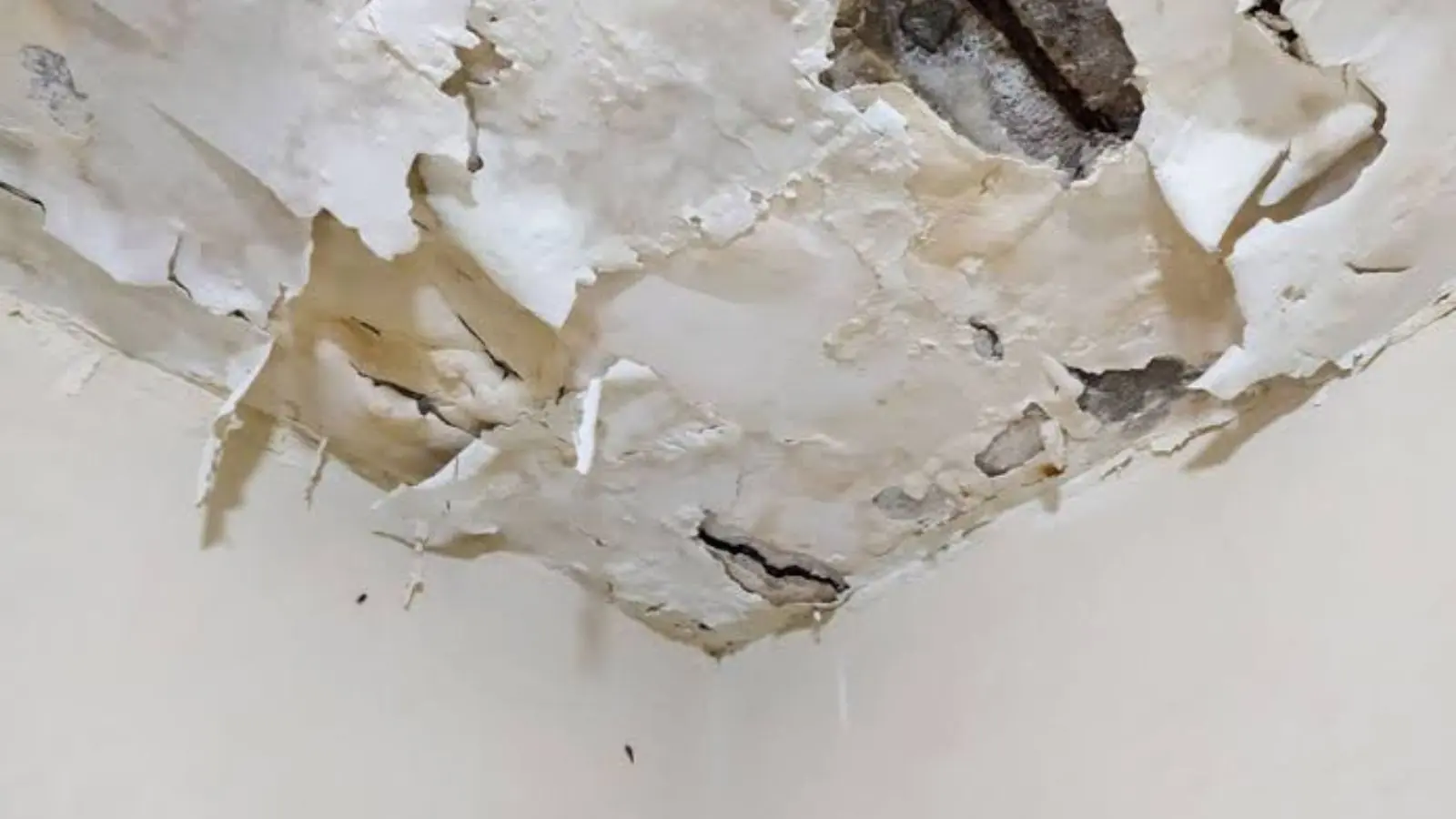
Ceiling water damage repair in Evergreen, CO means removing the wet drywall, plaster or insulation above a room, drying the cavity behind it, and rebuilding the surface so it matches the rest of the house. The brown ring on the paint is only the part you can see. Water usually travels along joists and pipes before it shows up, so the wet area is often larger than the stain.
Most failed repairs skip a step or do the steps out of order. Paint over a damp ceiling and the stain bleeds back through within weeks. Patch before the leak is fixed and you will be cutting the same hole again next season.
Step zero: find and stop the water
Nothing else matters until the source is closed. A plumber can trace a supply line or drain leak, a roofer can deal with failed flashing, and an HVAC technician can clear a clogged condensate line. If you cannot tell which it is, turn off the water to the house and watch whether the drip stops. A drip that continues after the supply is off points to the roof or a drain, not a pressurized line.
Once the source is closed, deal with the water that is already inside. Put a bucket under any active drip, then poke a small hole at the lowest point of a bulging section so trapped water drains in a controlled way instead of letting go all at once. Move furniture and cover floors with plastic.
The repair sequence, in order
Professional crews work the same order on almost every ceiling job. The list below shows what happens and why each stage has to finish before the next begins.
Assess and map the wet area
A moisture meter and a thermal imaging camera show how far the water spread beyond the stain, including into neighbouring joist bays and the wall tops.
Remove what cannot be saved
Saturated drywall, sagging insulation and any wet ceiling texture come down. Cutting a clean line past the last damp reading keeps the opening square and easy to patch.
Dry the cavity
Air movers and an LGR dehumidifier run until readings in framing and remaining drywall match a dry reference spot elsewhere in the house, as the ANSI/IICRC S500 water standard describes.
Treat and seal
Framing that was wet gets cleaned, and stained wood is sealed with a stain-blocking primer before any new board goes up.
Hang and finish new drywall
New board is screwed to the joists, taped, mudded and sanded, then textured to match the surrounding ceiling.
Prime and paint
A full ceiling coat of primer and paint, edge to edge, hides the repair better than a spot patch.
If you want the cleanup and drying side done by a crew, the water mitigation service covers the first four stages. The final three stages are water damage repair, which is the rebuild.
Patch or replace: how to decide
Not every wet ceiling has to come down. A single small stain from a short event, on drywall that is still firm, may dry in place and take a stain-blocking primer. The trouble starts when the board has softened, because soft gypsum does not regain its strength after it dries.
Replacement is the safer call in a few situations. Press a gloved finger against the stain: if it dents, crumbles or feels spongy, the board is finished. The same goes for sagging, for water that came from a dirty source such as a drain backup, and for any ceiling that stayed wet longer than a day or two.
| Ceiling condition | Typical decision | Why |
|---|---|---|
| Small faint ring, board firm, dry readings | Prime and repaint | The paper face is intact and the cavity is dry |
| Bubbled or peeling paint, board still firm | Dry in place, then repair the surface | Moisture sits in the paint layer and the top paper |
| Soft, spongy or crumbling board | Cut out and replace | Gypsum loses strength once saturated and does not recover |
| Visible sagging or bulging | Replace the whole section | Water is trapped and the board may let go without warning |
| Water from a drain or sewage line | Remove affected material | Contaminated water is not a drying job on porous materials |
| Textured ceiling with wet insulation above | Replace board and insulation | Wet insulation holds moisture against the framing |
Why drying has to come before rebuilding
A ceiling can feel dry to the hand while the joists above it are still wet. Wood framing and fibreglass insulation release moisture slowly, and a closed-in cavity may stay damp for days. Closing it up too early traps that moisture against new drywall and gives mold a place to start.
EPA homeowner guidance puts the target at drying wet materials within about one to two days. That is why professionals measure, not guess. Readings are taken at the start and again each day, and the equipment stays until the numbers are flat.
If the damp area is hidden or spreads past a small patch, a crew with a moisture meter is cheaper than a second repair. Ask any company whether its technicians work to ANSI/IICRC S500 and whether they will show you the readings, not just tell you the ceiling is dry.
Insulation, wiring and light fixtures
Water from above rarely stays in the ceiling board. It soaks into the blown or batt insulation, runs along electrical cable and collects in recessed light housings. A fixture that is full of water is a shock hazard, so leave the lights off and have the circuit switched off at the panel before anyone reaches overhead.
Wet insulation is almost always removed, since it compresses and stays damp. Wiring that was wet should be checked by a licensed electrician before the new ceiling covers it. That inspection costs little compared with opening the ceiling again.
Matching texture and paint
The patch is where most homeowners see the repair, even when the board underneath is perfect. Knockdown, orange peel and popcorn finishes each need different tools, and an old popcorn ceiling that has to be scraped in a hurry brings its own decisions, so ask whoever is doing the work how they plan to blend it. Paint the whole ceiling plane from wall to wall so there is no visible edge.
Stain blocker belongs under the paint, not mixed into it. Two coats of a shellac-based or oil-based primer on the stained area, followed by ceiling paint, is the usual approach. Plain latex over a water stain will often show it again within a season.
What Evergreen homes face above the ceiling
Evergreen sits at about 7,160 feet and receives roughly 80 inches of snow a year, so roofs spend long stretches loaded with snow that melts and refreezes. A ceiling leak in January may come from a roof edge, not a plumbing line, which changes who you call first and when repairs can safely start.
For repairs that involve more than painting, such as re-roofing, mechanical or electrical work, ask Jefferson County Building Safety which permits apply to your address in unincorporated Jeffco. Their number is 303-271-8260, and they list online permits for building, electrical, mechanical and re-roof work. Asking before the work starts avoids a stop-work surprise later.
Homes in Conifer sit higher and often carry more snow load, and crews serving Indian Hills deal with steep, narrow access. Ask any crew how they plan to reach the job and where they will stage their equipment.
Insurance and documentation before repair
Colorado Division of Insurance guidance on burst pipe claims is useful for any ceiling leak. Contact your insurer as soon as possible, take steps to prevent more damage, and get the company's instructions before making repairs. Photograph the stain, the source and any removed materials before they go to the dump.
Sudden and accidental water damage is often covered. Gradual leaks and neglect often are not. Check your policy and ask your insurer, because your own language controls.
Wet ceiling right now?
Dispatch is open 24/7 and a restoration professional can map the wet area before anything is cut.
Frequently asked questions
Can I just paint over a ceiling water stain?
Only if the ceiling is dry, the source is fixed and the board is firm. Stain-blocking primer goes on first, then ceiling paint. If the stain returns, there is still moisture in the cavity.
How long does ceiling repair take after the water is gone?
Drying usually takes several days, and the rebuild adds time for mud to dry between coats, then texture and paint. Your technician can give you a schedule once the damage is mapped.
Do I have to replace the whole ceiling?
Not always. Often only the wet section comes out, and the rest is repainted for an even look. A section is replaced when the board is soft, sagging or was wet from a dirty source.
Is a winter ceiling leak in Evergreen always a roof problem?
No, but it is worth checking. With roughly 80 inches of snow a year, ice at the roof edge is a common cause, though a frozen supply line or a stuck condensate drain can look identical from below. Trace the source before anyone patches.