
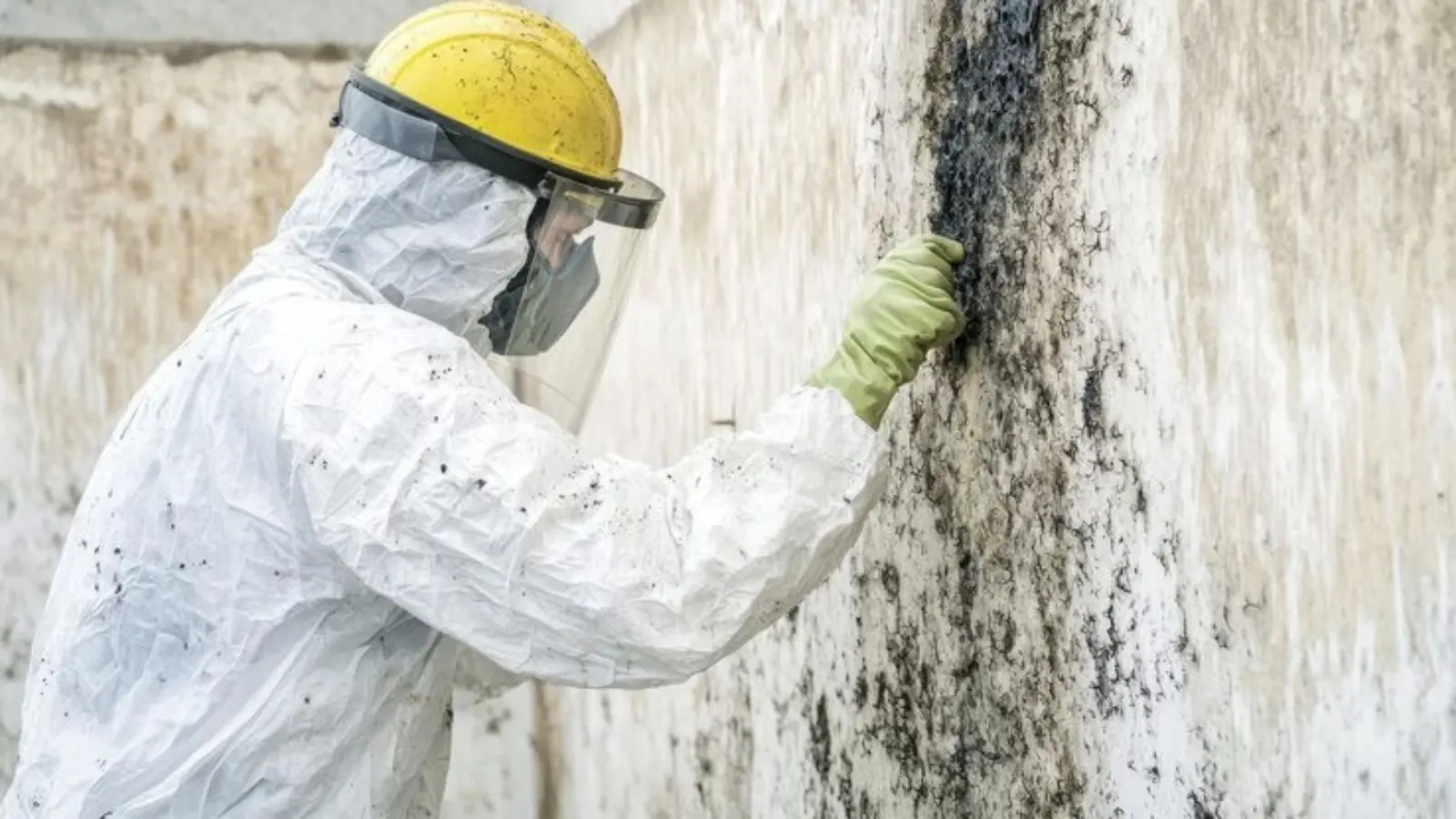
Removing mold from a wall means two jobs: taking the growth off or out of the wall materials, and finding the moisture that fed it. In Evergreen, CO, the second job is the one people skip, and it is why a spot returns to the same corner a few months after it was scrubbed. A wall is a layered assembly, and what you can see on the paint is often the smaller part of the story.
This guide walks through how the surface changes the approach, what sits behind the drywall, what surface cleaning does and does not solve, and when a professional crew should open the wall.
Start with what the wall is made of
Mold behaves differently on a hard, sealed surface than on a porous one. Glazed ceramic tile gives it little to hold, while paper-faced drywall, wallpaper paste and unsealed plaster soak up moisture and let growth settle in. The material tells you how far the problem can reach.
The table below lays out the common wall surfaces and how each is usually handled. It reflects general practice and EPA homeowner guidance, not a rule for every case.
| Wall surface | Why mold holds on | Usual approach |
|---|---|---|
| Painted drywall | Paper facing and gypsum absorb moisture, paint only hides the stain | Small surface spots may be cleaned with protection, damp or crumbling board is cut out and replaced |
| Wallpaper | Paste and backing trap moisture against the wall | Paper is usually removed, because growth often sits underneath it |
| Plaster over lath | Dense but porous, and the lath behind can stay damp | Surface cleaning may work, a wet plaster wall needs drying and a look behind it |
| Tile and grout | Tile is sealed, grout and the backer board are not | Grout can often be cleaned, a soft or wet backer board must come out |
| Textured or popcorn finish | Rough surface holds spores and is hard to clean evenly | Usually removed or replaced in the affected section |
Why a painted spot is rarely the whole story
Drywall is gypsum sandwiched between sheets of paper, and mold likes paper. A stain on the paint can mean the back face of that paper is already colonized. If the board has ever been soaked, a surface wipe only treats the side you can reach.
Press gently on the area. Board that feels soft, crumbles, bubbles under the paint, or smells musty after you clean is telling you the problem is deeper than the finish. Dry, firm wall with a small patch of surface growth is a different situation.
EPA homeowner guidance says a small area, roughly 10 square feet or less, is something a homeowner can often handle with protection, while larger or hidden growth calls for a professional. Wear gloves, eye protection and a well-fitted respirator if you go that route, and keep the work area closed off from the rest of the house.
What is behind the drywall
Moisture reaches a wall from several directions, and each leaves a different pattern. Knowing the likely source keeps you from cleaning the same patch over and over.
Plumbing in the cavity
A slow supply-line weep, a failing drain joint or a loose shower valve can wet the back of a wall for weeks. The visible sign is often a stain that grows slowly, a baseboard that swells, or paint that bubbles at one spot. A moisture meter and a thermal imaging camera can map the damp area without cutting anything, which helps a crew decide how much board is actually involved.
Condensation on exterior walls
Warm indoor air carries water vapor. When it meets a cold exterior wall, some of that vapor condenses on the cooler surface, which is common in corners, behind furniture pushed tight to the wall, and in closets on the north side of a house. If the stain sits in a corner and tracks with cold weather, condensation is a prime suspect.
Window and roof-line leaks
Failed caulk, a cracked window flashing or a poorly sealed sill lets rain and melting snow run into the wall below the window. These leaks tend to leave a stain under the sill or along the top plate. Water that enters from outside needs an outside fix first, or any drywall you replace will be wet again.
What surface cleaning does and does not solve
Scrubbing with detergent and water can remove visible growth from a hard, nonporous surface, and EPA guidance treats that as reasonable for a small area. What it cannot do is dry a wet wall cavity or restore a damaged board. If the source of moisture is still active, growth can start again, and no cleaning method can promise otherwise.
Painting over a stain does not settle it either. Paint can hide discoloration while the damp material underneath stays damp. Per EPA guidance, the order is always the same: stop the water, dry the materials, then clean or replace what is affected.
Routine sampling is not usually needed to make these decisions. You also cannot tell what species a patch is by its color, so a dark spot is not a reason to panic and a pale one is not a reason to relax. Fix the moisture, and treat any health questions as a matter for your physician.
What Evergreen walls deal with in winter
Evergreen sits at about 7,160 feet and gets roughly 80 inches of snow a year, so exterior walls spend long stretches cold. Warm, humid air from showers, cooking and drying laundry can meet that cold surface and leave moisture on the wall, especially in corners and behind furniture.
If you notice damp paint or a stain on an outside wall each winter, move furniture a few inches off that wall, watch the pattern, and ask a professional to check the cavity with a moisture meter before you repaint.
Melting snow adds a second path. Snow stacked against siding or sitting on a roof edge can find a weak sill or flashing and run into the wall, so a stain that appears during a thaw points toward an outside leak. Homes in nearby areas such as Conifer, which sits higher still, may see the same pattern for longer stretches of the season.
When the wall needs to open
A crew opens a wall when moisture readings stay high after the source is fixed, when board is soft or crumbling, when the affected area is larger than a small patch, or when the stain keeps coming back. Cutting an inspection hole lets them see the back of the board, the framing and the insulation. Wet insulation is usually removed because it holds moisture against the wall.
Opening a wall puts material into the air, so containment matters. Professional crews typically seal the work area with plastic sheeting, set up negative air with a HEPA air scrubber, and use HEPA vacuums on the cut edges. Ask any company whether its crews work to ANSI/IICRC S520, the published standard for mold remediation, and ask whether your state licenses mold work.
If the wall was wet from a recent water event, the drying side is as important as the removal. Air movers and LGR dehumidifiers bring the framing back to a stable moisture level before new board goes up. A mold remediation team can handle the removal and containment, and once the cavity is dry, water damage repair puts the wall back together.
A sensible order of work
Find and stop the water
Fix the leak, seal the window, or correct the condensation cause before touching the mold.
Dry the area
EPA homeowner guidance is to dry wet materials within about 1 to 2 days, so run fans and a dehumidifier early.
Check the wall, not just the paint
Look for soft board, bubbling, swelling at the baseboard, and readings from a moisture meter.
Decide who does the work
A small, dry, surface patch may be a homeowner job with protection. Larger or hidden growth belongs with a professional.
Remove what cannot be cleaned
Porous, damaged board, wallpaper and wet insulation are cut out and bagged, not painted over.
Confirm it is dry before closing up
New drywall goes on only after the framing reads dry on a moisture meter.
A note on neighbors in the canyon towns
Homes near Bear Creek and the canyon road often have older plaster or knotty-pine walls, and the same rules apply. If you are in Golden or another nearby area, the surface type still decides how much can be cleaned and how much must be replaced. Drywall, wallpaper and tile each behave differently.
Not sure what is behind that stain?
Our restoration professionals can check the wall and tell you what they find.
Frequently asked questions
Can I just scrub mold off painted drywall and repaint?
For a small, firm, dry patch, EPA homeowner guidance says surface cleaning with protection is something many homeowners can do. If the board is soft, bubbled or keeps staining, the growth likely goes deeper than the paint and the board may need to be cut out. Repainting without fixing the moisture just hides the problem.
How do I know if the mold is inside the wall?
Signs include a musty odor that persists after cleaning, a baseboard or paint that swells, and stains that spread over time. A moisture meter and thermal imaging camera can show damp areas without cutting, and an inspection hole confirms what is behind the board.
Do I need to test the mold to know what it is?
Routine sampling is not usually needed, and you cannot identify a species by its color. A lab is the only way to name one, and most homeowners do not need that step. The useful questions are where the moisture came from and how much material is affected.
Why does mold show up on my north-facing outside wall every winter in Evergreen?
Cold exterior walls in a high, snowy climate can collect condensation from indoor humidity, and a north-facing corner stays coldest. Moving furniture off the wall, running exhaust fans while showering, and having the cavity checked can help show whether it is condensation or a leak.