
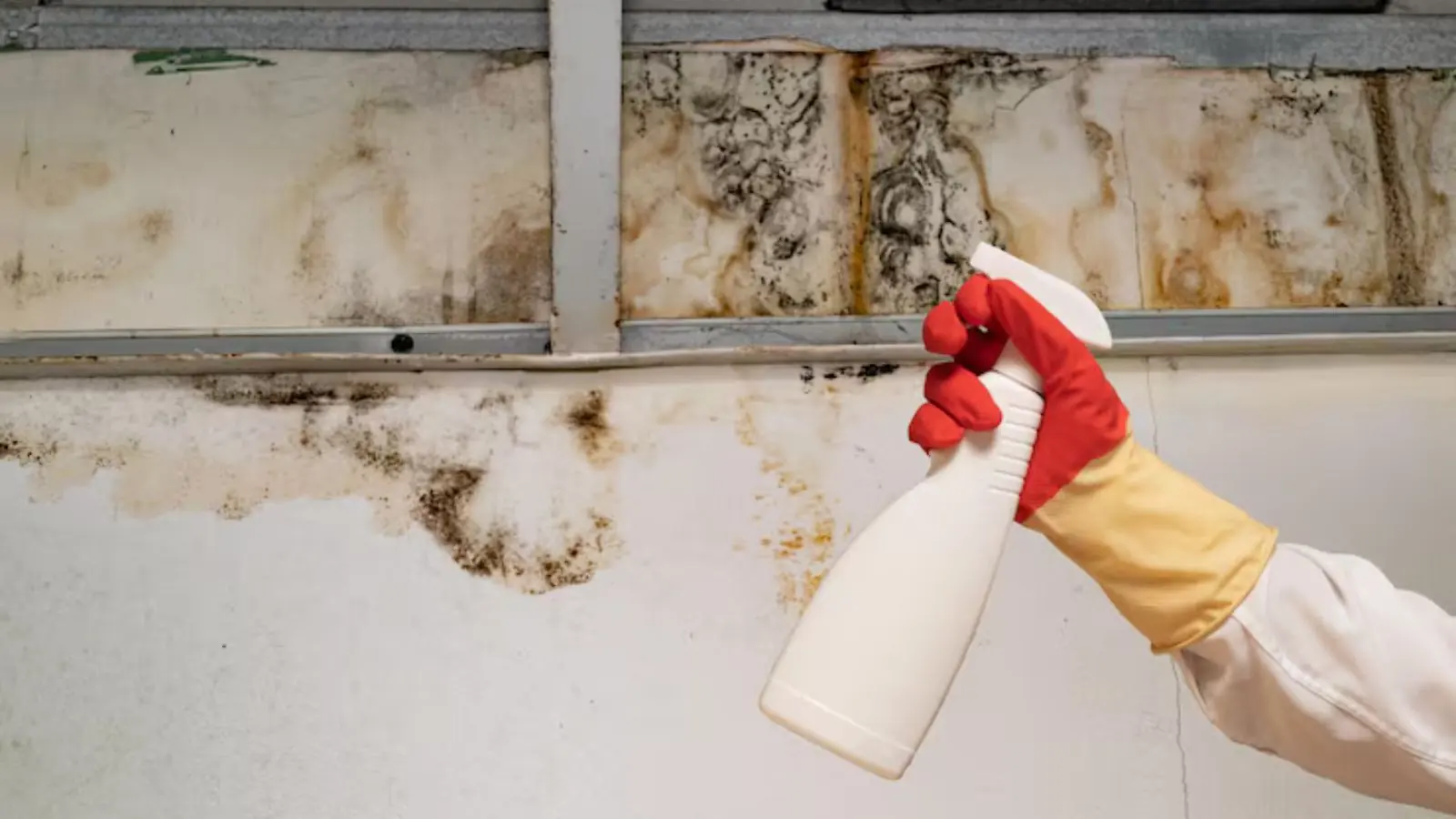
Mold on wood is surface or deeper growth that develops when lumber, trim or furniture stays damp long enough for spores to settle in. For a homeowner in Evergreen, CO, the practical question is how far the growth went and whether the piece can be cleaned or must be replaced. Wood holds water like a sponge, so the answer depends on the species, the finish and how long the moisture stayed.
This guide covers finished and unfinished wood, framing and subfloor, decks, cabinets and furniture, and how professionals dry wood back to a stable moisture level.
Finished wood and raw wood behave differently
A sealed, varnished or painted surface keeps water out for a while, so growth often sits on top of the coating and wipes away. Raw lumber, the cut ends of boards and wood with worn finish pull moisture in through the grain. Once the fibers are damp, growth can follow the moisture into them.
That is why the same dark spot can be a ten-minute cleanup on a lacquered table and a replacement decision on a stud. Look at the coating first. If it is intact, the growth is more likely on the surface. If the finish is cracked, peeling or missing, assume some of it has gone in.
You cannot tell what species is growing by its color, and a dark patch does not mean it is more serious than a pale one. A lab is the only way to name a species, and most homeowners do not need that step. The useful move is to deal with the moisture and the material.
Surface growth versus deep penetration
Surface growth shows as a fuzzy or powdery film that sits on the wood. You can often see the grain through or around it, and the wood underneath feels hard. Deep penetration is harder to see. The wood may be stained through, feel soft when pressed with a screwdriver tip, smell musty after cleaning, or darken again within days.
A quick test is to probe the piece in a few spots with a blunt tool. Solid wood resists, while rotted or heavily damaged wood gives way and crumbles. Soft fibers mean the piece has lost strength, and cleaning will not give it back.
EPA homeowner guidance says a small area, roughly 10 square feet or less, is something a homeowner can often handle with protection, while larger or hidden growth calls for a professional. It also says to fix the water source first and dry wet materials within about 1 to 2 days.
Cleaning and sanding approaches, in cautious terms
On a small area of solid, finished wood, the cautious approach is to vacuum loose growth with a HEPA vacuum, then wipe with a detergent solution and a damp cloth, and dry the surface right away. Avoid dry brushing, because it throws material into the air. Wear gloves, eye protection and a well-fitted respirator, and keep the area closed off from the rest of the house.
Sanding can remove a thin surface layer on unfinished or lightly affected wood, but it also creates fine dust. Professionals sand or media-blast framing inside containment, with HEPA air scrubbers running and HEPA vacuums attached to the tools. A homeowner sanding in an open room can spread the problem to other surfaces.
No cleaning method can promise that growth will not return. If the wood stays damp, it can come back. If it is dried and stays dry, there is much less for it to feed on.
Which wood parts you are dealing with
Different parts of a home call for different decisions. The cards below summarize the usual thinking for each.
Framing and subfloor
Studs, joists and plywood that stayed wet may be cleaned in place if the growth is on the surface and the wood is solid. Soft, delaminated or deeply stained pieces are cut out and replaced.
Decks and exterior timbers
These live outdoors and are meant to get wet, so look for soft spots, cracks that hold water, and growth in shaded corners. Surface growth on solid boards can often be cleaned, but a deck board you can push a screwdriver into is a replacement candidate.
Log and timber elements
Large solid pieces can dry out well if the water stops, but deep checks and cracks can hold moisture. Have a professional take moisture readings before you decide on any treatment.
Cabinets
Particleboard and thin veneers swell and break down when wet, and they are hard to clean once swollen. Solid wood doors and frames are better candidates for cleaning.
Furniture
A sealed solid piece may be cleaned and dried. Upholstered frames, particleboard pieces and anything that smells musty after cleaning may be better replaced.
Drying wood to a stable moisture level
Removing growth without drying the wood sets up the next round. Professionals use a moisture meter to check the wood and compare it to a dry reference reading from similar material in an unaffected part of the home. Wood is considered ready when readings level off at that stable range.
Drying uses air movers to pull moisture off the surface and LGR dehumidifiers to pull it from the air. Thick framing and subfloor can take longer than drywall, and a thermal imaging camera helps find wet pockets that readings might miss. Opening a floor cavity or pulling a toe-kick can let air reach damp wood that would otherwise stay wet.
Our water damage cleanup work focuses on removing standing water and drying structural wood, while mold remediation handles growth that is already established. If the wood is still wet from a recent water event, drying comes first.
When wood has to be replaced
Wood is usually replaced when it is soft, crumbling or visibly rotted, when growth has stained deep into the fibers, or when the piece is structural and has lost strength. Particleboard, OSB and thin veneers that swelled from water are replaced more often than they are saved. Ask a professional to explain which pieces were removed and why.
Structural wood replacement sometimes involves permits. Ask Jefferson County Building Safety, at 303-271-8260, whether your project needs one before work starts.
What the creek corridor taught local homes about wet wood
In June 2026, a flash flood hit the Bear Creek corridor. The Jefferson County Sheriff's Office cited about 6 inches of rain, and Bear Creek rose from about 6 cubic feet per second to nearly 1,900. In Kittredge, water lines of 2 to 3 feet showed on home exteriors, and Troublesome Gulch water entered homes.
Wood that soaked in that kind of event, such as sill plates, lower studs, cabinet bases and subfloor, should be checked rather than assumed to be fine because it looks dry.
If your home was affected, document the damage before you start repairs, and ask your insurer what they need. For structural wood replacement, ask Jefferson County Building Safety whether a permit applies. They handle unincorporated Jeffco and their online permits include building and mechanical work. For homes in Indian Hills or Idledale, the creek and canyon roads are the reason water events tend to arrive fast, so early drying matters.
A decision path for a moldy wood piece
Stop the moisture
Find the source, whether a leak, a flood or condensation, and stop it before cleaning anything.
Test the wood
Probe with a blunt tool and press on the surface. Solid wood is a candidate for cleaning, and soft wood is a candidate for removal.
Contain the work
Close off the area, wear protection and avoid dry brushing, because disturbed growth spreads.
Clean or sand cautiously
HEPA vacuum first, then wipe with detergent and water. Sanding belongs inside containment with HEPA equipment.
Dry to a stable reading
Use air movers and a dehumidifier, and confirm with a moisture meter before closing up.
Replace what failed
Swap out soft, delaminated or deeply stained pieces, and ask Building Safety about permits for structural work.
Wood looks damaged and you are unsure?
Our restoration professionals can take moisture readings and tell you which pieces can stay.
Frequently asked questions
Can I sand mold off wood myself?
Sanding can remove a thin surface layer, but it throws fine dust into the air. For a small area, wear a respirator and eye protection and work with the area closed off. Larger areas, framing and anything inside walls are better left to a crew with containment and HEPA equipment.
Is white or green growth on wood less serious than black?
Color does not tell you the species, and no color is more dangerous than another. A lab is the only way to identify one, and most homeowners do not need that. What matters is how much wood is affected and whether it is still damp.
Will painting or sealing the wood stop the mold?
Sealer and paint can cover a stain, but they do not dry out wet wood. If moisture remains in the fibers, the problem can come back under the coating. Dry the wood first, then finish it.
My home near Bear Creek had wet wood after the June 2026 flood. What should I check?
Look at the lowest wood parts first, such as bottom plates, cabinet bases, subfloor and trim. Probe for soft spots and ask a professional to take moisture readings. For structural replacement, contact Jefferson County Building Safety to ask about permits, and call your insurer before major repairs.